
Wedding Music
Solo Musician Setup for Weddings: Sound, Stage and Technical Requirements
Booked a live musician for your wedding? Here is everything you need to know about sound systems, microphones, stage space, and technical setup before the day arrives.
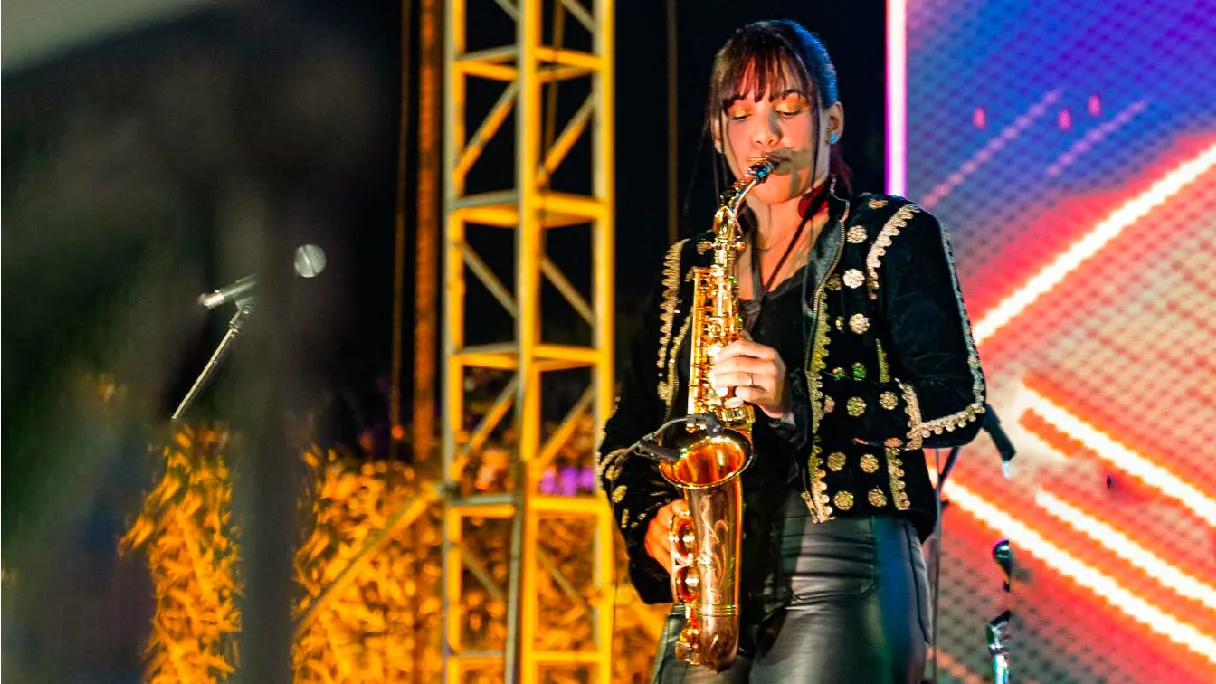
Booking the musician is the exciting part. The sound system conversation, not so much.
But here’s the thing: the most talented musician in the world will underdeliver at your wedding if the technical setup isn’t right. A violinist performing through a tinny venue speaker. A saxophonist with no amplification in a ballroom built for 400 guests. A musician arriving at a venue to discover there is no power point near the performance area, thirty minutes before guests walk in.
These are not hypothetical scenarios. They happen, at weddings that were otherwise beautifully planned, because the technical side of live musician setup is the question nobody thinks to ask until it’s almost too late.
This guide covers everything you need to know: sound requirements, microphone setup, stage space, indoor versus outdoor considerations, power supply, sound checks, and who is responsible for what. By the end of it, you’ll know exactly what questions to ask your venue, and what to confirm with your entertainment company, before the day arrives.
1. Basic Sound Requirements for a Solo Musician
The fundamental question is simple: does the musician need amplification?
The answer depends on three things, the instrument, the venue size, and the type of performance.
Acoustic-only performances are possible for very small, intimate venues (under 60 guests) where the musician is in close proximity to the audience and the ambient noise level is low. A cellist or harpist performing during a quiet dinner in a small private room may not require amplification at all.
For the vast majority of Indian wedding settings—larger venues, outdoor spaces, cocktail functions with background noise, or any situation where the musician is positioned away from the main guest area—amplification is essential. Without it, the music gets lost, the performance feels flat, and the investment in live entertainment delivers a fraction of its potential.
A professional sound system for a solo musician typically includes:
-
A PA system (powered speakers on stands)
-
A mixer or audio interface
-
A microphone or direct input (DI) connection for the instrument
-
Monitor speaker (so the musician can hear themselves)
-
Cables and stands
The size of the PA system scales with the venue. A cocktail hour in a 100-person garden requires different amplification from a 500-person ballroom reception.
2. Microphone and Pickup Needs by Instrument
Different instruments require different amplification approaches. Understanding this helps you have more informed conversations with both your venue and your entertainment company.
Saxophone: Typically uses a clip-on microphone attached to the bell of the instrument, or a stand microphone positioned in front. Clip-on mics give the saxophonist freedom of movement, important for roaming performances. Both options feed into the mixing desk and out through the PA system.
Violin: Can be amplified via a contact microphone (a pickup clipped directly onto the instrument) or a small clip-on mic near the bridge. Electric violins, increasingly popular at luxury weddings, have built-in pickups and connect directly to the audio system, offering more volume control and a fuller amplified sound.
Flute: Typically uses a small clip-on condenser microphone positioned near the instrument’s sound hole. The flute is naturally quieter than brass or strings, making careful microphone placement and sound engineering particularly important for larger spaces.
Cello: Uses a contact pickup or microphone positioned near the bridge or f-holes. The cello’s resonance can feed back at high volumes, so experienced sound engineers set the gain carefully.
Harp: A clip-on microphone or a set of two microphones, one at the top and one at the base, captures the full tonal range of the instrument. Harp amplification is one of the more technically nuanced setups, and is best handled by an experienced sound engineer.
Piano / Keyboard: An acoustic piano at a venue can be miked, but most solo musicians performing at weddings bring or request a digital keyboard, which connects directly to the mixing desk via a line-level output, simpler and more controllable.
The key point across all instruments:
The quality of the microphone and the skill of the sound engineer matter as much as the quality of the musician. A great musician through a poor sound setup sounds average. A great musician through a professional setup sounds extraordinary.
3. Backing Tracks and Audio Connections
Most international solo musicians performing at Indian weddings use backing tracks, pre-recorded accompaniment that provides harmonic and rhythmic support to the live instrument. This is standard professional practice, not a shortcut, and it significantly enhances the richness of what the audience hears.
A violinist performing a Bollywood song arrangement, for example, will typically play live over a backing track that provides the orchestral accompaniment. The result sounds fuller, more musical, and more emotionally resonant than the live instrument alone.
What this requires from the venue:
The musician needs to be able to connect a playback device, a phone, laptop, or dedicated audio player, to the PA system or mixing desk. This connection is typically made via a 3.5mm audio cable, a USB output, or Bluetooth (though Bluetooth is not recommended in professional live audio settings due to latency).
Before the event, confirm with your venue or production team:
-
Is there an available auxiliary input on the mixing desk?
-
Can a laptop or phone be connected to the PA system?
-
Is there a dedicated channel for the playback device?
If the venue has a house sound system but no available inputs for an additional device, this needs to be resolved in advance, not on the day.
4. Stage Space and Artist Positioning
Solo musicians don’t require a large stage, but they do require a clearly defined, appropriate performance space. Getting this right is more important than most clients expect.
Minimum space requirements:
-
Most solo musicians need a performance area of at least 2 metres by 2 metres
-
Add additional space for a music stand, a monitor speaker, and the sound engineer’s cables
-
A harpist requires more space, approximately 2 metres by 3 metres, due to the size of the instrument
-
A roaming musician (saxophonist or violinist moving through the crowd) doesn’t need a fixed stage, but does need a clear starting position and unobstructed pathways
Positioning considerations:
-
The musician should be visible to the majority of guests, positioning them behind a pillar, in a corner, or too far from the main guest area reduces both visual and sonic impact
-
For cocktail hours, a position slightly elevated above the guest floor level (a small platform or stage riser) increases visibility significantly
-
For dinner settings, a central or easily visible position allows a roaming musician to move naturally between tables
-
For wedding entries, the musician should be positioned where the entering couple and guests can see them clearly, the visual element is as important as the sound
Stage vs. no stage: A small stage riser (20–30cm elevation) is ideal for most solo musician performances, it improves sightlines and creates a clear visual focal point. However, a stage is not essential. Many of the most effective solo musician performances at Indian weddings happen floor-level, with the musician positioned within the guest space rather than elevated above it.
5. Indoor Versus Outdoor Performance Setup
Outdoor performances introduce variables that indoor performances don’t, and they require additional planning.
Wind: Wind is the enemy of certain instruments. The flute and harp are most affected, even a light breeze can significantly affect the sound produced. Outdoor flute and harp performances should be in sheltered or covered areas wherever possible. The saxophone and violin are considerably more wind-resistant.
Ambient noise: Outdoor venues, particularly those near roads, water features, or other event spaces, have higher ambient noise levels than indoor venues. This means the PA system needs to work harder, and the sound engineer needs to calibrate accordingly.
Heat and direct sunlight: Musical instruments are sensitive to temperature. String instruments, violin, cello, harp, should not be left in direct sunlight, as heat affects both the instrument’s structure and its tuning. The performance area should be shaded or covered.
Rain: Even light rain can damage instruments and electronic equipment. For outdoor evening performances, confirm that there is a covered or canopied performance area, and have a contingency plan for unexpected weather.
Power supply outdoors: Power points may be further from the outdoor performance area than expected. Confirm cable run lengths with the venue in advance, and ensure that any outdoor electrical setup is handled by a qualified technician.
6. Power Supply Requirements
A solo musician’s technical setup requires reliable power supply. The typical requirements:
-
PA system (two powered speakers): Two standard power points, ideally on separate circuits to avoid overloading
-
Mixing desk: One power point
-
Monitor speaker: One power point
-
Musician’s playback device (if charging required): One power point
Total minimum: Three to four power points near the performance area.
This sounds straightforward, but at many wedding venues, particularly heritage properties, outdoor spaces, and older banquet halls, power points near the intended performance area can be limited or entirely absent. An extension cable is a simple solution, but it must be a heavy-duty cable rated for the load, and it must be safely secured to avoid a trip hazard in a guest area.
Confirm power supply with your venue coordinator well before the event, and ensure the entertainment company or production team is aware of the available power situation.
7. Sound Check and Rehearsal Timing
A sound check is not optional. It is the single most important technical step in ensuring a live musician performance goes smoothly, and it should happen before guests arrive.
A professional solo musician sound check typically takes 20 to 45 minutes, depending on the complexity of the setup. During the sound check, the musician and sound engineer calibrate microphone levels, set the balance between the live instrument and backing tracks, adjust the monitor volume so the musician can hear themselves, and test the playback device connection.
What this means for your event timeline:
The musician needs access to the performance space at least 60 to 90 minutes before the function begins, ideally before other event elements (catering setup, decor installation) that may be happening in the same space.
Coordinate with your wedding planner, venue coordinator, and entertainment company to ensure that:
-
The performance area is set and clear before the sound check
-
The PA system is in place and powered
-
A sound engineer is present, not just the musician alone
-
The sound check time is protected in the event day timeline
If the sound check is cut short or skipped entirely due to venue delays or scheduling pressure, the risk of a technically compromised performance increases significantly.
8. Coordination Between the Artist, Venue, and Production Team
In an ideal setup, there is a single point of contact responsible for coordinating between the musician, the venue’s audio team, and the event’s production team. When this coordination is left to the musician alone, or worse, to the client on the event day, things fall through the gaps.
A professional entertainment company handles this coordination as part of their service. They communicate the musician’s technical rider to the venue in advance, confirm the sound setup before the day, brief the venue’s sound engineer on the specific requirements, and have a coordinator present on the day to manage logistics so the musician can focus entirely on performing.
If you are booking a musician independently, this coordination responsibility falls to you or your wedding planner. Make sure someone has confirmed the following with the venue at least one week before the event:
-
PA system availability and specifications
-
Sound engineer availability
-
Available inputs for playback device
-
Power supply near the performance area
-
Sound check access time
-
Any venue-specific sound restrictions (volume limits, curfew times)
9. What the Artist Usually Carries
Understanding what the musician typically brings helps clarify what the venue or client needs to arrange.
Most international solo musicians bring:
-
Their instrument (and case)
-
Performance costume
-
Clip-on microphone or pickup (specific to their instrument)
-
Backing tracks on a phone or laptop
-
Audio cable for playback device connection
-
In-ear monitor (for personal audio monitoring during performance)
What musicians typically do not bring:
-
PA system (powered speakers)
-
Mixing desk
-
Stage monitors
-
Microphone stands and cables
-
Gaffer tape, cable management
-
Stage riser or performance platform
These elements are typically provided by the venue’s in-house audio setup or arranged separately through a production company.
10. What the Client or Event Company May Need to Arrange
Depending on your venue’s in-house capabilities, you may need to separately arrange:
-
A professional PA system suitable for the venue size
-
A mixing desk with enough input channels for both the microphone and playback device
-
A qualified sound engineer who has experience with live music events (not just DJ events)
-
A stage riser or platform if elevated positioning is desired
-
Additional power supply points near the performance area
-
Cable management for the guest area (safety and aesthetics)
For destination weddings and outdoor events particularly, don’t assume the venue has a production setup suitable for live music. Ask specifically, and get confirmation in writing.
Pre-Event Technical Checklist: Questions to Ask Your Venue
Before confirming the artist’s booking, run through this checklist with your venue coordinator:
-
Is a professional PA system available at the venue?
-
Is there a qualified sound technician available for the event?
-
Can the artist connect a phone or laptop for playback, and is there an available input on the mixing desk?
-
How many power points are available near the intended performance area?
-
Is the performance area covered or sheltered (for outdoor events)?
-
Is the performance area protected from rain and direct heat?
-
Are there sound volume restrictions or noise curfews at the venue?
-
What time can the artist access the venue for a sound check?
-
Is the performance area clear of other setups before the sound check?
-
Who is the production or audio contact on the day?
Getting clear answers to all of these questions before the event, not on the morning of, is what separates a technically smooth performance from one that spends its first fifteen minutes solving problems that should have been solved weeks earlier.
Booking an International Musician? Let’s Get the Technical Details Right.
At The Event Stage, our booking process includes a full technical review for every musician we deploy. We communicate the artist’s requirements to your venue in advance, confirm the setup with your production team, and have a coordinator present on the day to ensure the technical environment is exactly what the performance needs.
When you enquire with us, share your venue name, event type, performance area, and what audio equipment the venue has available. We’ll handle the rest.
Explore our international musicians or contact us directly.
Because a great performance needs more than a great musician. It needs the right setup behind them.