
Wedding Music
Where Should You Use Live Musicians at an Indian Wedding? A Function-by-Function Guide
Not sure where live music fits into your wedding? Here is a function-by-function guide to where a live musician adds the most value at an Indian wedding.
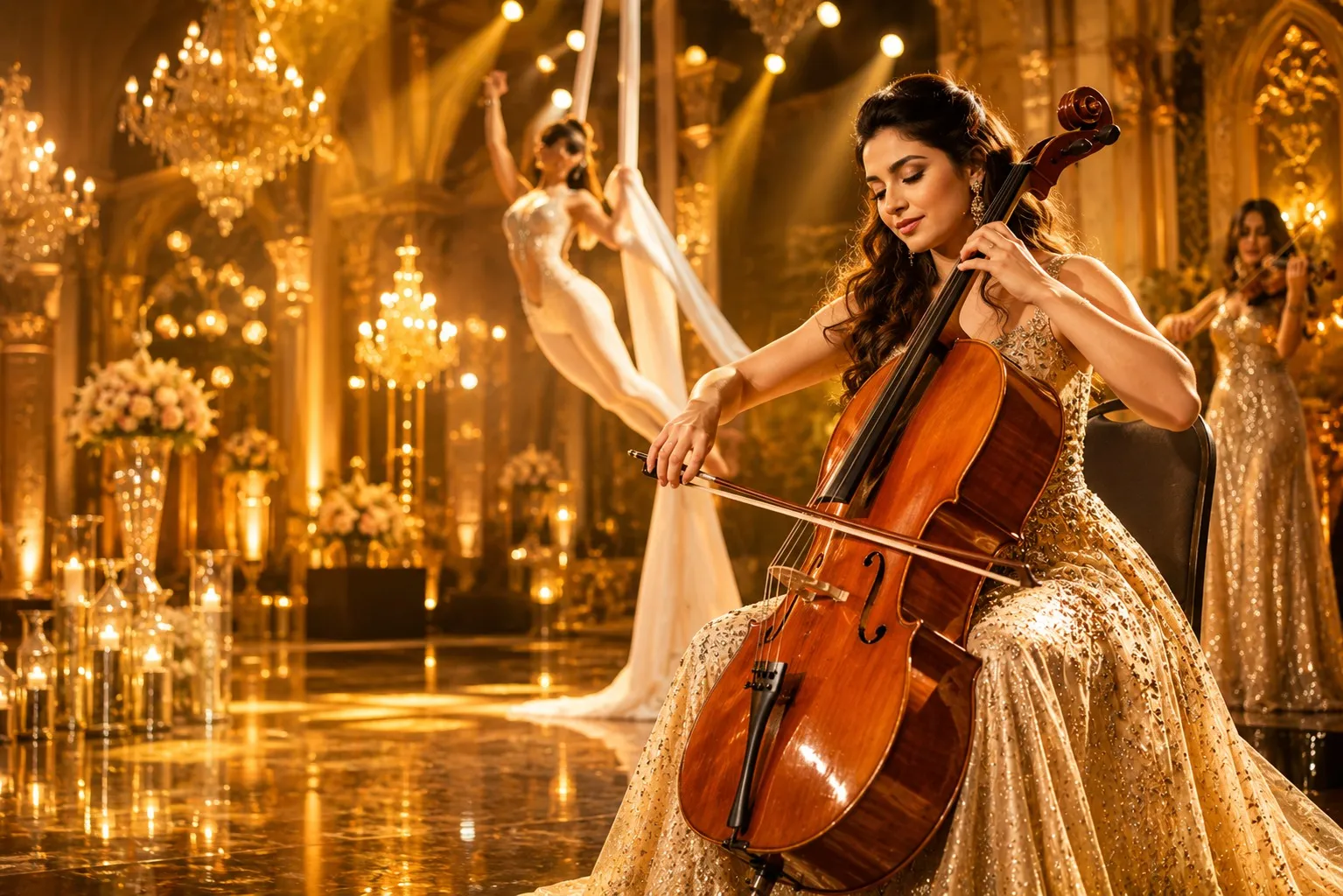
Most couples who want live music at their wedding ask two questions: which instrument, and how much does it cost. Both are important. But there’s a third question that matters just as much, and almost nobody asks it upfront.
Where in the wedding should the live music actually go?
Placement is everything. A violinist performing during guest arrivals creates a completely different impact from the same violinist performing during dinner. A saxophonist at a cocktail hour does something that a saxophonist at a Sangeet cannot. The instrument is one decision. Knowing exactly which moment to place it in is the decision that determines whether the music is simply present, or genuinely transformative.
This guide walks through every major function of an Indian wedding and tells you honestly where live music adds the most value, what it sounds like in practice, and which instruments work best for each moment.
Guest Welcome: The First Impression That Sets Everything Else Up
Best instruments: Violin, saxophone, flute, harp, piano
The moment guests arrive at your wedding, before they find their seats, before they’ve had a drink, before the event has officially begun, is one of the most underestimated opportunities in the entire celebration.
Most weddings fill this moment with recorded playlist music. It’s fine. It’s forgettable.
A live musician positioned at the welcome area does something categorically different. Guests walk in, hear live music being played in the space they’ve just entered, and immediately sense that something has been thought about here. That this is not a standard event. That they are somewhere special.
The psychological impact of this first impression is significant and lasting. Guests who feel the quality of an event from the moment they arrive are primed to experience everything that follows through that same lens.
For guest welcomes, the instrument should be warm and inviting rather than dramatic. A violinist or flautist playing softly as guests arrive creates a sophisticated, welcoming atmosphere without demanding attention. A harpist positioned near the entrance is visually stunning, the harp itself becomes part of the welcome experience before a single note is played. A saxophonist works beautifully for more contemporary, vibrant weddings where the welcome tone is celebratory rather than formal.
The musician doesn’t need to perform loudly or theatrically at this stage. Their job is to create an atmosphere, to fill the space with something living and beautiful that makes guests feel genuinely welcomed.
Mehndi and Daytime Celebrations: Light, Warm, and Intimate
Best instruments: Flute, violin, acoustic guitar, piano
Mehndi and Haldi functions have a distinct energy, lighter than the Sangeet, more intimate than the reception, rooted in warmth, colour, and the particular joy of a daytime celebration among the people closest to the couple.
Live music at a Mehndi should match that energy precisely. Light, melodic, and interactive, present enough to enhance the atmosphere, restrained enough not to overpower the conversations and laughter that make this function special.
A flautist performs beautifully at Mehndi events. The flute’s airy, gentle quality feels perfectly suited to a daytime outdoor setting, it blends with the natural environment, adds a layer of elegance without demanding attention, and creates the sense of a beautifully curated celebration without feeling formal or stiff.
A violinist playing a mix of soft classical pieces and popular songs works wonderfully for more upscale Mehndi functions. An acoustic guitarist brings a more relaxed, contemporary feel that works well for destination Mehndi events by a pool or in a garden.
The key at this function is that the music should feel like it belongs, natural, unhurried, and genuinely in service of the mood rather than trying to create one.
The Wedding Entry: The Single Most Powerful Moment for Live Music
Best instruments: Violin, saxophone, cello, hanging musician
If there is one moment in an Indian wedding where live music creates an impact that cannot be replicated by any recording, it is the entry.
When a bride or groom walks into a room, the music that accompanies that walk shapes everything about how the moment is experienced, by the couple, by the family, and by every guest in the room. A recording delivers the sound. A live musician delivers something the recording cannot: the feeling that this music is being played for this person, in this moment, right now.
A violinist playing a personalised instrumental arrangement of a song that means something to the couple, a favourite Hindi film song, a piece of Western classical music, a contemporary pop song reimagined for strings, creates a moment that guests feel in a way that surprises them. Rooms go quiet. People reach for their phones not to record, but because they don’t know what to do with the emotion.
The saxophonist works equally well for entries that call for more contemporary, sensual energy, deep, warm, and cinematic in a completely different register from the violin.
For the most theatrical entries at luxury and destination weddings, a hanging musician, a violinist or drummer performing while suspended above the guests, creates one of the most visually and emotionally arresting moments available in wedding entertainment. It is the kind of entry that becomes the story guests tell for years.
When choosing music for a wedding entry, work with your entertainment company to identify a specific song arrangement that is personally meaningful. Generic repertoire played brilliantly is good. A personalised arrangement played brilliantly is unforgettable.
Varmala and Ring Ceremony: Romantic Background Music
Best instruments: Violin, cello, flute, harp
The Varmala or ring ceremony is a moment of intimate significance within a larger, often very busy day. Two people exchanging garlands or rings while surrounded by hundreds of guests, family members jostling for photographs, and the general beautiful chaos of an Indian wedding.
Live music at this moment doesn’t need to be dramatic. It needs to be present, quietly romantic, gently holding the emotional significance of what is happening without competing with it.
A cellist performing softly in the background of a Varmala creates a warmth and depth that is genuinely moving. The cello’s resonance fills the emotional space of the moment in a way that feels supportive rather than theatrical. A violinist playing a soft, romantic arrangement serves the same purpose with a lighter touch.
A harpist is an extraordinary choice for this moment at luxury and destination weddings, the instrument’s visual elegance and gentle sound create an atmosphere of romantic refinement that photographs beautifully.
The key at this function is restraint. The music is not the focus. The couple is. The live musician’s job here is to make the moment feel more significant than it would in silence, and then to fade gracefully into the background.
Cocktail Evening: Where Live Music Does Its Best Work
Best instruments: Saxophone, violin, flute, cello, piano, harp
If there is a single function where a live musician consistently delivers the highest return on investment, it is the cocktail hour.
The cocktail evening has a particular energy, guests are mingling, drinks are flowing, conversations are happening across the room, and the formal structure of the wedding functions has relaxed into something more social and spontaneous. It is the function that most benefits from music that is simultaneously engaging and unobtrusive, music that enriches the atmosphere without demanding the room’s attention.
A live musician performing through a cocktail hour does exactly this. They fill the space with something warm and beautiful that guests feel without necessarily focusing on. And then, at a certain point in the evening, a particularly brilliant phrase or a song the crowd recognises draws heads, creates a spontaneous moment of collective attention, and then releases back into ambience.
The saxophone excels at cocktail performances. Its warmth and personality fill a room naturally, and a skilled saxophonist builds sets that move seamlessly from ambient jazz to popular songs that guests recognise, creating a dynamic, evolving experience across 60 to 90 minutes.
The violin adds a more formal elegance, excellent for cocktail hours at luxury or heritage venue weddings where the aesthetic calls for refinement over energy. A roaming violinist who moves between guest groups and tables creates an intimate performance experience that feels personal and genuinely special.
The piano, where the venue and logistics permit, creates a timeless cocktail atmosphere. The harp is the most visually striking cocktail instrument, guests gather around it, photograph it, and find themselves listening rather than simply hearing.
For destination weddings, a cocktail evening live musician is often the entertainment investment that guests mention most specifically when describing the wedding afterwards. The outdoor setting, the drinks, the conversations, and the live music threading through it all. It is a simple concept that delivers extraordinary results in the right setting.
Reception Dinner: Music That Enhances Without Overpowering
Best instruments: Violin, cello, flute, acoustic guitar, piano
The reception dinner presents a particular live music challenge: the room is full, conversations are happening at every table, and the music needs to be present and beautiful without making it difficult for people to talk.
This is the function where the wrong choice, an instrument that’s too loud, a musician who doesn’t understand the dynamic, actively undermines the experience rather than enhancing it. And it’s the function where a skilled musician who truly understands the art of background performance creates something quietly extraordinary.
A violinist or cellist performing through a reception dinner creates an atmosphere of genuine luxury. The music is there, guests are aware of it, they appreciate it, they may even find themselves listening, but it never demands that conversations stop. A skilled dinner musician knows exactly how to calibrate their volume, their repertoire, and their energy to serve the room rather than lead it.
A flautist is an underrated dinner musician choice, light enough to never overpower, beautiful enough to be noticed and appreciated, and distinctive enough to set a reception dinner apart from every other dinner a guest has attended.
For larger reception settings, a roaming musician who moves between tables during dinner creates a series of personal, intimate performance moments within a large event, guests at each table experience the music up close for a few minutes, creating individual memories within the collective experience.
After-Party: When the Musician Joins the DJ
Best instruments: Saxophone, violin, electric violin, drums
The wedding after-party is where live music takes its most energetic form, not as a standalone performance, but as a complement to the DJ set that has taken the dance floor.
A saxophonist performing live over a DJ set is one of the most popular wedding entertainment combinations in India right now. The DJ provides the foundation, the beats, the mix, the crowd-reading, while the saxophonist adds live musical energy on top, improvising over the tracks, building solos at peak moments, and creating a live performance energy that a DJ alone cannot generate.
The result feels like something between a concert and a club night, spontaneous, electric, and unlike anything guests have experienced before at a wedding.
An electric violinist serves the same purpose with a different sonic quality, the violin’s soaring melodic range over high-energy beats creates a particularly dramatic effect that works beautifully for peak moments of an after-party. The key at this function is choosing a musician who is comfortable in this format, who can read a DJ’s set, find the right moments to come in and pull back, and add live energy without disrupting the flow. Not every classical musician can do this. It requires a specific kind of musical versatility and performance confidence that the best international musicians develop through years of exactly this kind of experience.
A Quick Reference: Which Function, Which Instrument
| Wedding function | Best instruments | Performance style |
|---|---|---|
| Guest welcome | Violin, flute, harp, saxophone | Soft, ambient, welcoming |
| Mehndi / Haldi | Flute, violin, acoustic guitar | Light, warm, understated |
| Wedding entry | Violin, saxophone, cello | Dramatic, personalised, emotional |
| Varmala / ring ceremony | Cello, violin, harp | Gentle, romantic, restrained |
| Cocktail evening | Saxophone, violin, piano, harp | Engaging, social, dynamic |
| Reception dinner | Violin, cello, flute | Elegant, unobtrusive, sophisticated |
| After-party | Saxophone, electric violin | Energetic, collaborative with DJ |
The Final Word on Placement
The right musician at the wrong moment is wasted. The right musician at the right moment is one of the most powerful tools in wedding entertainment.
The best way to make this decision is not to think about instruments in isolation, but to walk through your wedding timeline function by function and ask: what does this moment need? What atmosphere am I trying to create? What do I want guests to feel as they move through this part of the day?
A good entertainment company will help you answer those questions, and then match the right musician to the right moment with confidence.
Plan Your Wedding Live Music With The Event Stage
At The Event Stage, our international solo musicians, saxophonists, violinists, flautists, cellists, harpists, pianists, and ensembles are available for every function of your wedding, from guest welcome to after-party.
We help you place the right artist at the right moment, so the music doesn’t just accompany your wedding. It becomes part of it.
Explore our international musicians or contact us directly.